Baltic Capital Partners – EU Migration Rule Change Summary – 2025
Around this time of year, when people are heading back to work, and planning major events for the year ahead, we often get asked what rules have actually changed in recent months, and whether or not they still qualify for EU residency. We thought it would be helpful then to produce an annual wrap-up each year and below we list significant changes that occurred or took effect during 2025 – in each EU member state:
As we’ve written a few times through the last year, our advice is, if you’re thinking of spending more than 90 days at a time in Europe, expanding your lifestyle or business, you should submit your online application, in your chosen destination as soon as possible. As the extensive list below demonstrates, rules are constantly changing, and often without warning.
There are many nuances related to migration rules, and each EU member state is slightly different. The sands shift frequently, and what is a good path towards your European residency today, may be gone tomorrow (like a Maltese passport by investment, or Portuguese Golden Visa, which were both eliminated over the last year).
Take that first step now, and start your journey as soon as possible.
Once you have your residency, you’re locked in and safe. You can make solid plans, exploring the EU with confidence. And of course, you never have to read emails like this again!
If you’re ready to make some time to discuss your individual requirements with us, and discover the fastest, smoothest and most affordable way for you to achieve your goals in Europe, schedule some time directly with us here –
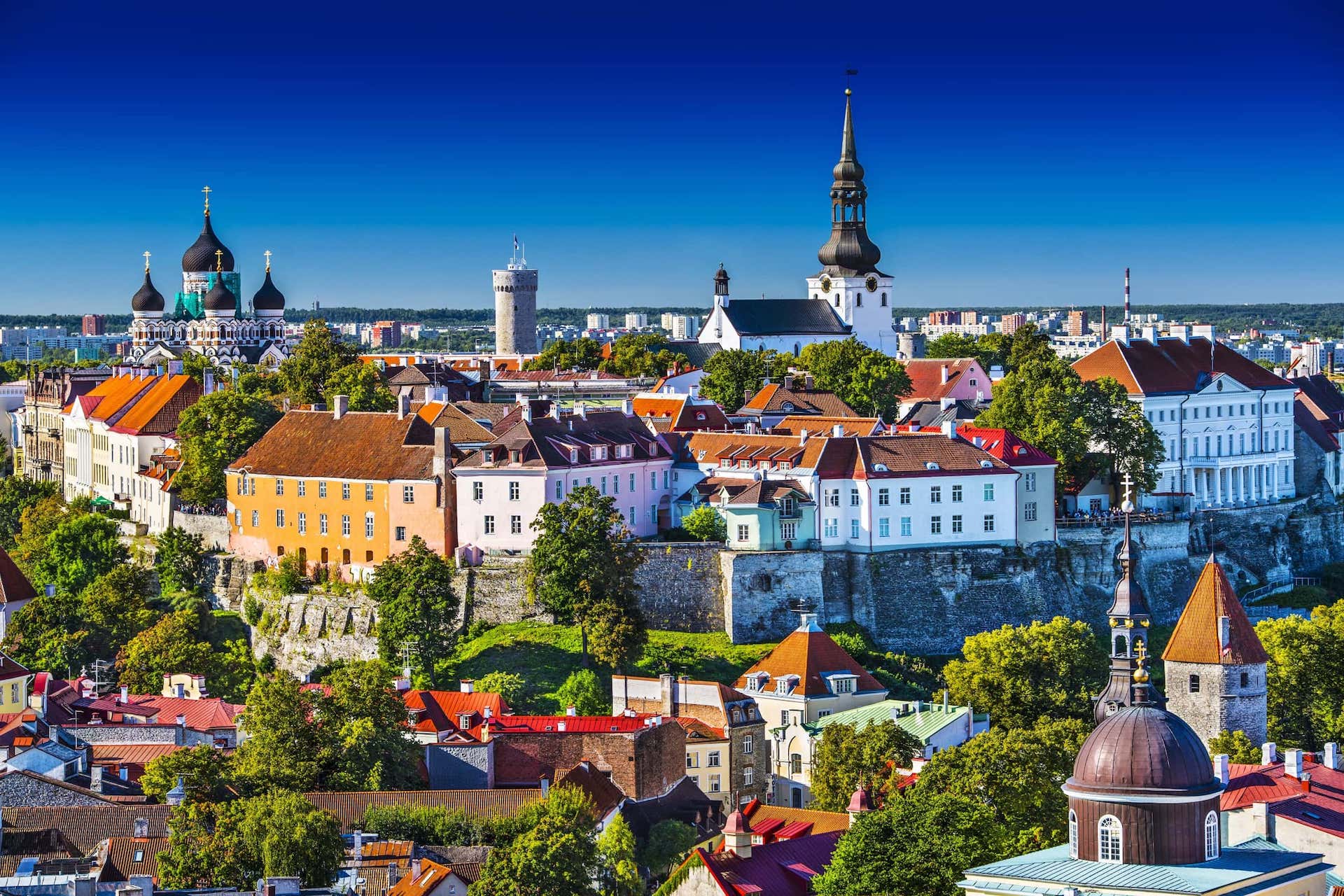
A panoramic view of Tallinn, Estonia, showcasing its historic architecture and modern skyline against a clear blue sky.
Estonia:
In 2025 Estonia enacted extensive amendments to its Aliens Act (passed April 2025) aimed at tightening employer requirements and promoting integration . From May 1, 2025, initial provisions took effect (e.g. higher penalties for misuse of permits). Phased-in from Jan 1, 2026, key changes include:
Real business requirement: Companies applying to sponsor a foreign worker’s residence permit must show at least 6 months of genuine economic activity in Estonia beforehand . This is to combat shell companies (“paper firms”) abusing permits.
Temporary agency regulation: Similarly, from 2026 temporary work agencies leasing foreign labor must be registered and have 6 months of activity in Estonia/EEA . The prior requirement for a financial wage guarantee was dropped in favor of this track-record rule.
Employer registration: All employers of foreign workers must now be listed in the commercial register in Estonia (closing a loophole where non-resident firms could employ foreigners via short-term work notifications) . Public institutions are exempt. Going forward, foreign employees of unregistered firms must use the Intra-Company Transfer permit route.
Integration requirements: The law introduced a mandatory adaptation program and A2 Estonian language exam requirement for anyone seeking a long-term residence permit (“settling permanently”) . Foreign residents must complete a government-run adaptation course and achieve A2 proficiency (those educated in Estonian are exempt) to qualify for permanent status. This aims to support integration into Estonian society.
Future changes: The amended Act also provides that starting 2029, if the annual immigration quota is reached, new work permit applications will be held until the next year’s quota is set (preventing over-subscription). And by 2028, Estonia plans to digitalize the entire residence permit application process (online document pre-submission).
These 2025 changes represent a shift towards stricter employer vetting and an expectation that long-term migrants integrate via language and civics.
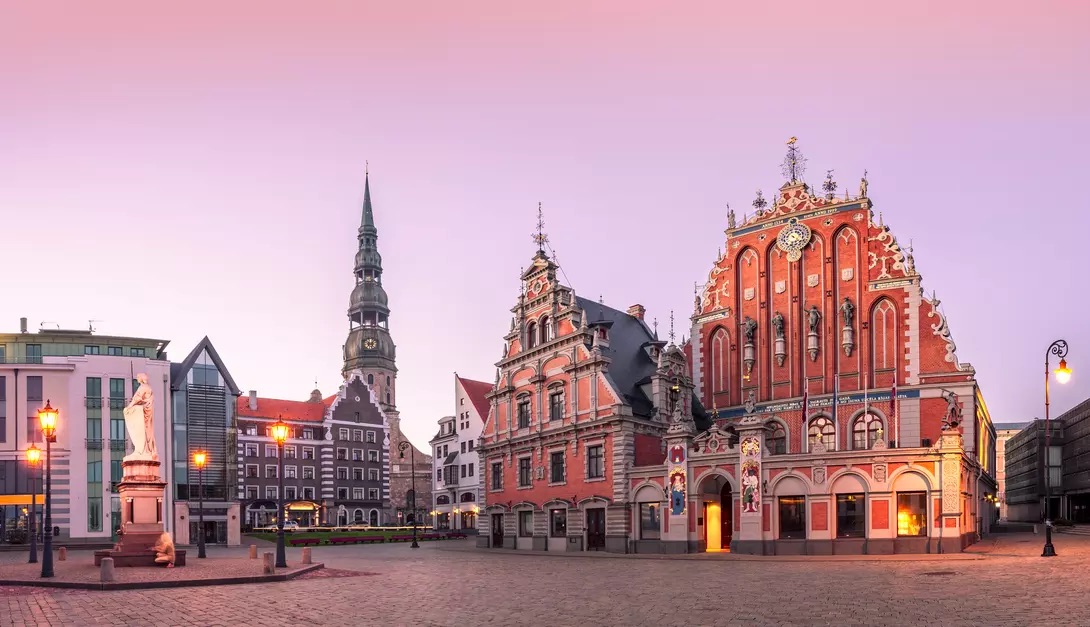
A vibrant view of Riga’s old town square, showcasing its charming architecture and lively atmosphere filled with people.
Latvia:
Latvia made security-driven immigration changes in 2025.
Most prominently, from September 1, 2025 Latvia implemented a pre-entry electronic registration system for many non-EU visitors.
Third-country nationals who do not already hold a Latvian/EU visa or permit must submit personal and travel information online (via the State Threat Prevention Information System, eta.gov.lv) at least 48 hours before arriving.
This requirement – essentially a Latvian electronic travel authorization (ETA) – aims to identify security risks before entry. (EU/EEA/Swiss, NATO or OECD nationals and those with Latvian visas/residence are exempt .) Failure to register can result in denial of entry or administrative fines.
This measure was introduced via amendments to the Immigration Law adopted April 2025 and in force by fall . Also in mid-2025, Latvia tightened entry rules for Russian citizens with former Latvian non-citizen status, requiring them to prove language proficiency or face expirations of their residence – part of post-war policy shifts.
Additionally, Latvia’s parliament decided that Russian can no longer be chosen as the second foreign language in public schools from Sept 2026, reflecting an integration policy change (though in education, not immigration, strictly).
City skyline at dusk, featuring illuminated buildings reflected in a calm river below
Lithuania:
Lithuania adopted several immigration policy updates in 2025:
Work Quota System Overhaul: Effective Jan 1, 2025, Lithuania sharply reduced its annual work permit quota from 40,000 in 2024 to 24,830 for 2025. It also abolished sector-specific sub-quotas – the new quota is a single total across all industries . By capping foreign work permits at ~1.4% of the population, officials aimed to manage labor migration levels. (Notably, in 2024 the quota hadn’t been fully used.) Because of the cut, employers must plan earlier to secure slots. Moreover, for 2025 Lithuania made the quota apply to temporary agency workers and “employers of record” arrangements, closing a loophole that had been exploited for illicit employment. Highly-qualified workers are now often exempt from the quota if paid at least 1.5× the average salary (or 1.2× for shortage occupations).
Stricter rules on job changes: From 2025, foreign employees holding a Temporary Residence Permit for work must stay with their initial employer at least 6 months before they can apply to change jobs in Lithuania. (Previously, no minimum tenure was required.) This new 6-month rule prevents “job-hopping” immediately after arrival and aligns with ensuring the initial work purpose is genuine . Workers also must not quit the first job until the change application is filed, or risk losing their permit.
Higher fines for illegal employment: In 2025 Lithuania increased penalties for employing foreigners without authorization – companies now face fines up to €11,000 (3–12× the minimum monthly wage) per offense, roughly quadruple the prior maximum . Company directors can be fined €1,500–5,000 per unauthorized foreign worker, and repeat offenders can be barred from hiring any foreign nationals for one year . These tougher sanctions reflect a crackdown on labor exploitation.
Integration requirement for service workers: (As noted above, passed in 2025 for Jan 2026 start) Lithuania’s Parliament approved a law obliging foreign workers in customer-facing jobs to pass Lithuanian language exams (A1 level) within 2 years of starting residence, or face non-renewal of their work permits . This law, which came into force Jan 2026, is listed in the first section. It was accompanied in late 2025 by government resolutions detailing exam procedures and a grace period to mid-2026.
Other 2025 steps: Lithuania also announced it will strengthen border controls (finishing a border fence with Belarus) and facilitate the immigration of highly skilled Ukrainians and Belarusians as part of geopolitical strategies (not formalized in law, but in policy statements). Overall, 2025’s changes aimed to balance economic needs with security/integration.
Sunset over Paris with the Eiffel Tower silhouetted against a vibrant cityscape
France:
France’s major immigration changes of 2025 were embodied in the new Immigration Law 2024 (formally enacted in early November 2024, with most provisions effective from Jan 1, 2026). During 2025 the French government prepared implementation of these rules:
Language and Civics Tests: As detailed above, France will now require higher French language proficiency (B1→B2 for citizens, A2→B1 for 10-year card) and a values/civics test for many applicants . Though effective start was Jan 2026, the law was passed in 2024 and widely communicated in 2025 so immigrants could prepare.
Talent Passport changes: The law also reformed some visa categories – e.g. creating a new multi-year “Talent – Employee” permit and tightening criteria for others. (For instance, proposed was a “Talent Medical and Care” permit to attract health professionals, and measures to expedite expulsion of foreigners who commit serious crimes – these were debated through 2025.)
Asylum system and labor market: Separately, throughout 2025 France worked on an asylum system overhaul (the law included a controversial measure to require asylum-seekers to apply from abroad at “border asylum offices” – this was later soft-pedaled). France also modestly increased its labor immigration numbers via administrative instruction (e.g. raising the 2025 work authorization target by a few thousand, focusing on healthcare workers), but not via formal quota since France has no fixed quotas. The headline change remains the stricter integration requirements which were finalized in 2025 for Jan 2026 enforcement.
Austria:
In 2025 Austria approved significant measures to modernize and expedite skilled immigration:
Red-White-Red Card Reform: On December 10, 2025, the Austrian government announced a comprehensive overhaul of the Red-White-Red Card system (Austria’s points-based work/residence permit) . This includes moving all RWR applications online to a one-stop e-portal managed jointly by the Chamber of Commerce and Public Employment Service . The goal is to cut processing times to 8 weeks (down from 3–6 months) by automating document routing and allowing faster responses to labor shortages . The reform will also update the points criteria to recognize modern occupations (e.g. AI specialists) and shift the shortage occupation list to a rolling update rather than annual . These changes require legislative amendments – a draft bill will be circulated in early 2026, and implementation is expected in the second half of 2026 . Thus, 2025 saw the approval and announcement, but the go-live is in 2026 (we noted this under proposals for 2026).
Frontier Worker Permit: As mentioned, Austria implemented a new Frontier Worker residence permit from December 1, 2025 . This allows third-country nationals who legally reside in a neighboring EU country (Slovakia, Hungary, Czechia, or Slovenia) to work in Austria’s border regions without moving residency. Applicants must have permanent residency and work rights in the neighbor country and a local Austrian job offer near the border. The permit is valid 2 years and falls under Austria’s annual quota system for migration. It addresses labor needs in border industries (like Slovak commuters to Austrian factories) that previously had no suitable permit route.
Quotas and others: In Dec 2025, Lower Austria’s regional government advocated reducing federal immigrant family reunification quotas for 2025 (citing strain on housing), but ultimately the 2026 quotas for settlement permits (for family, etc.) were kept at similar levels, with a one-week online appointment window in early Dec 2025 for 2026 slots. Austria also continued border checks with Hungary through most of 2025 (due to secondary migration) until an EU Pact agreement allowed them to be lifted at year-end.
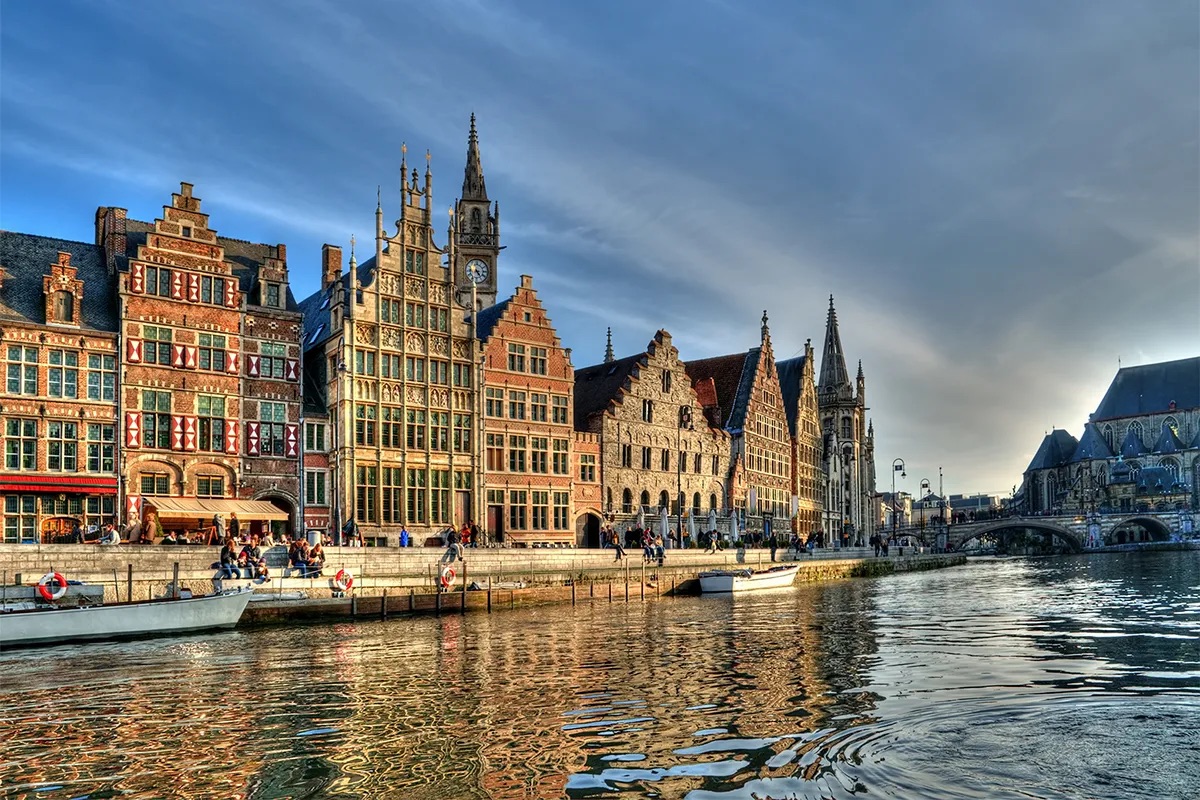
A scenic view of Bruges, Belgium, showcasing its historic architecture and picturesque canals
Belgium:
Belgium did not enact a single major immigration law in 2025, but there were several incremental policy changes:
Regional Integration Efforts: The Flemish Region (northern Belgium) moved forward with plans to require labor migrants to engage in integration. In May 2025, Flanders approved a program for mandatory “integration trajectories” for new non-EU workers, including pre-arrival orientation and post-arrival Dutch language courses . This will obligate foreign workers to start an integration program within a set time after arrival, with the legal basis being coordinated with federal law. The target to implement this is by 2027, but preparatory steps (budget, curricula) were undertaken in 2025 . Wallonia (French-speaking south) and Brussels also continued their own integration programs (though Brussels does not yet mandate them for workers).
Language tests for social benefits: In 2025 the Belgian federal government debated linking immigrants’ access to certain social assistance to integration efforts. A bill was introduced that would require long-term residents to show basic proficiency in one of Belgium’s languages and attendance of integration courses to qualify for some welfare programs . This sparked controversy and was not passed by year-end 2025. However, some communes (local authorities) began applying stricter checks on newcomers’ efforts to learn the language when assessing need-based benefits (within existing legal allowances).
Citizenship requirement discussion: Also in 2025, there was political discussion of tightening citizenship criteria. Proposals included raising the required language level from A2 to B1 and extending the residency requirement from 5 to 7 or 10 years . The government did not enact these in 2025, but an increase in the naturalization application fee (to €150 from €50) was under consideration. Thus, no change occurred in 2025, but it’s noteworthy as context.
Administrative changes: Belgium adjusted some administrative fees effective Mar 2025 – e.g. the “administrative fee” for first residence permit applications was indexed. For highly skilled work permit holders it increased to around €390. Additionally, as of Sept 2024 (just prior to 2025), Brussels and Wallonia transposed the EU Blue Card Directive update: Blue Cards in Belgium now allow changing employer after 12 months (instead of requiring a new permit) , and immediate family reunification without a waiting period for Blue Card holders. These came into practice in early 2025, smoothing processes for skilled foreign workers.
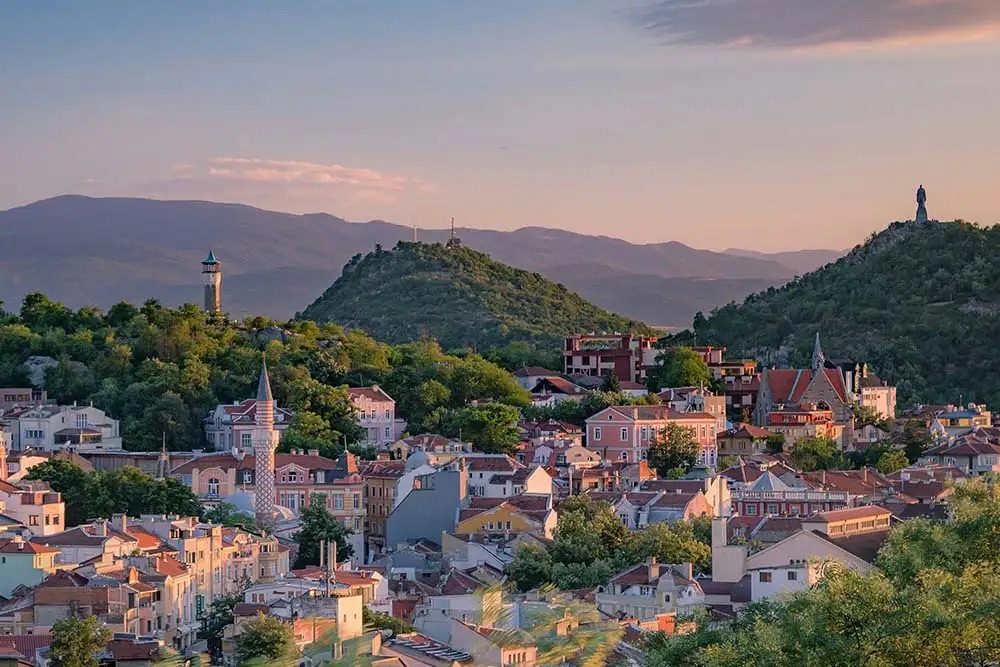
The city of Slovenia, framed by towering mountains, showcasing a stunning natural landscape
Bulgaria:
Bulgaria undertook comprehensive immigration amendments in 2025 (to the Foreigners in Bulgaria Act, adopted June 2025, effective late 2025):
EU Blue Card improvements: The law transposed the new EU Blue Card rules – Blue Card holders in Bulgaria can now change employers after 12 months without losing their status , and family members of a Blue Card holder enjoy faster access to residence (no longer waiting for 1 year of the principal’s residence). It also eased intra-EU mobility: an EU Blue Card issued by another country now allows the holder’s family to immediately join or accompany them if they move to Bulgaria . Family members are granted 90-day temporary residence cards on arrival while their Bulgarian residency is processed , streamlining integration into Bulgaria.
Digital Nomad Visa: As noted, the amendments introduced a Digital Nomad long-term visa category. Qualifying remote workers (employed outside the EU) can get a 6-month renewable residence permit in Bulgaria. This was a significant addition, aiming to attract foreign teleworkers. By clarifying required documents and centralizing issuance of the permits, Bulgaria made this pathway more accessible.
Company representative permit: A new provision allows foreign nationals who are authorized representatives of a foreign company (with proof the company has at least BGN 100,000 annual turnover) to obtain a long-term residence permit in Bulgaria. This is meant to facilitate business presence without local employment contracts. The foreign rep must show tax compliance and other docs.
Other changes: Bulgaria aligned its rules with Schengen since it’s preparing for full Schengen membership – stays in Bulgaria now count as Schengen-area time for visa-exempt visitors (and vice versa). It also specified that non-EU post-graduate students can get a one-year residence permit to seek jobs after graduation. Additionally, any non-EU national entering Bulgaria must declare their purpose of stay and address within 3 days via a standardized form, helping track arrivals.
These amendments updated Bulgaria’s framework to EU standards and added new avenues (digital nomads, business reps) to boost economic migration.
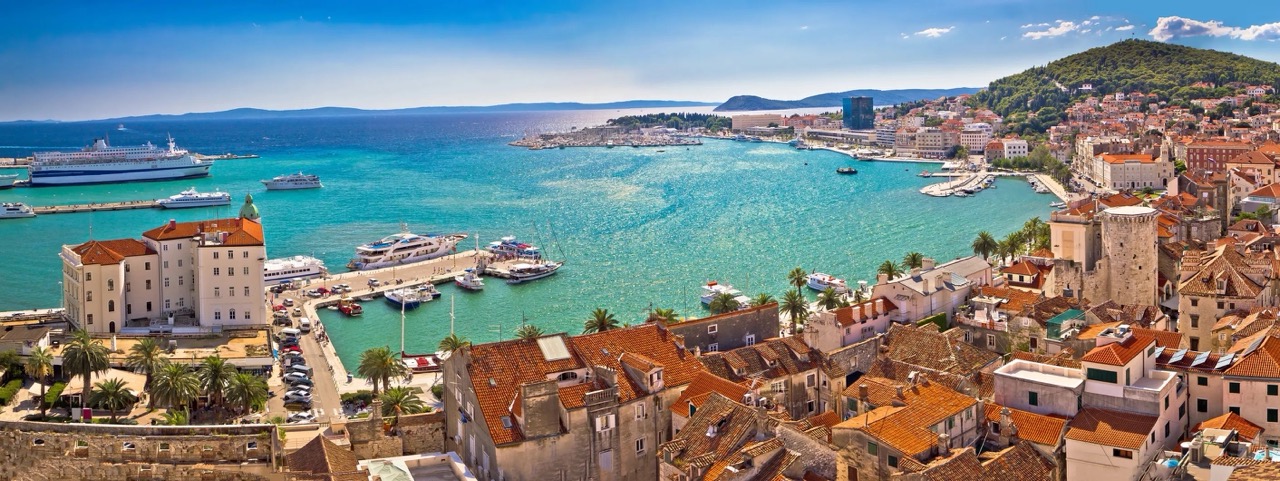
The cityscape of Split, Croatia, featuring ancient Roman ruins and vibrant waterfront along the Adriatic coast
Croatia:
In 2025, Croatia’s immigration policy stayed relatively steady.
One development was Croatia’s entry into Schengen on Jan 1, 2023, fully implemented by 2025 – meaning checks ended at internal EU borders and focus shifted to securing external borders. In terms of labor migration, Croatia in 2021 removed annual permit quotas; by 2025 it used a demand-driven system.
In 2025 the government continued promoting the simplification of hiring third-country nationals due to labor shortages (tourism, construction). E.g., Croatia expanded lists of occupations exempt from labor market testing (adding more trades). Additionally, in mid-2025 Croatia signed agreements with countries like India and the Philippines to facilitate recruitment of workers.
No new laws were passed, but these initiatives were notable.
Digital Nomads: Croatia’s digital nomad residence permit (launched 2021) continued strongly in 2025 – over 1,300 nomads had applied by late 2025. The government slightly adjusted the income proof requirement (to about €2,300/month) in 2025 due to currency change (Croatia adopted the euro in 2023). This was an administrative tweak, not a legislative change. In summary, 2025 for Croatia was about implementation and fine-tuning under existing laws.
A high-angle, vibrant panoramic view of the historic Kyrenia Old Harbour in Cyprus
Cyprus:
During 2025, Cyprus made minor updates but no major immigration law changes:
Digital Nomad Quota Increase: Cyprus launched a Digital Nomad Visa in 2022 with an initial cap of 100, later increased to 500. In March 2025, seeing high demand, the government announced the quota would be expanded further (to 1000 slots) and that Digital Nomad residence permits could now be renewed for up to 3 years (previously max 2). This allowed longer stays for remote workers.
Streamlined Fast-Track Residency: Cyprus continued its Fast-Track Permanent Residency program (for property investors of €300k+). In 2025 authorities tightened some monitoring – requiring applicants to attest they will reside in Cyprus periodically and not rent out the purchased property. This was in response to abuse concerns. Also, in Nov 2025 Cyprus clarified that applicants under this program must visit Cyprus once every two years or risk losing PR, an existing rule that was more strictly enforced.
Asylum backlog measures: Confronted with many pending asylum cases, Cyprus in mid-2025 introduced accelerated procedures – designating safe countries of origin and fast-tracking manifestly unfounded applications. It also opened a new Pournara reception center wing to better manage arrivals. These were policy and administrative changes in line with EU discussions, not new legislation.
Overall, Cyprus in 2025 focused on leveraging its existing visas (like the popular Category F for retirees and Digital Nomad visa) and ensuring compliance with those programs. No new visa categories were created that year.
A picturesque landscape of Prague, highlighting its iconic buildings and rich cultural heritage in the Czech Republic
Czech Republic:
The Czech Republic’s notable changes in 2025 were incremental:
Labor shortages and Special Programs: Czechia expanded its Special Work Visa Programs for selected countries. In Feb 2025, the government raised the annual quotas under programs like “Ukraine Preferred Workers”, “Philippines Workers” etc., by 20% to help industries fill vacancies. It also added Moldova to a pilot scheme for simplified hiring in agriculture. These programs operate via government resolutions, not requiring a new law, and were adjusted in 2025 to meet economic needs.
Student visas and Dual Intent: An amendment to the Foreigners Act took effect in August 2023 (just before 2025) allowing foreign students who finish Czech universities to switch status to an employee without first leaving the country. 2025 was the first full year this eased “dual intent” policy was in action, and Czech authorities reported a rise in such status changes, indicating success in retaining talent.
Digital Nomads (proposal): In 2025 lawmakers discussed creating a Digital Nomad visa for remote workers from outside the EU, similar to neighboring countries’ schemes. A draft proposal surfaced in late 2025 suggesting a one-year remote-worker visa. However, it was not passed in 2025. Czech officials instead promoted existing freelance trade licenses (“Živno visa”) for digital nomads in the interim.
Immigration digitalization: Czech immigration offices launched an online appointment system in 2025 to reduce in-person wait times, and a pilot for electronic submission of certain visa documents (e.g. inviting letters) was started. While not a law change, this administrative improvement was notable in easing immigration procedures.
The Czech Republic did not implement new legislation in 2025, but these policy tweaks and tech improvements aimed to make the system more efficient and responsive to the labor market.
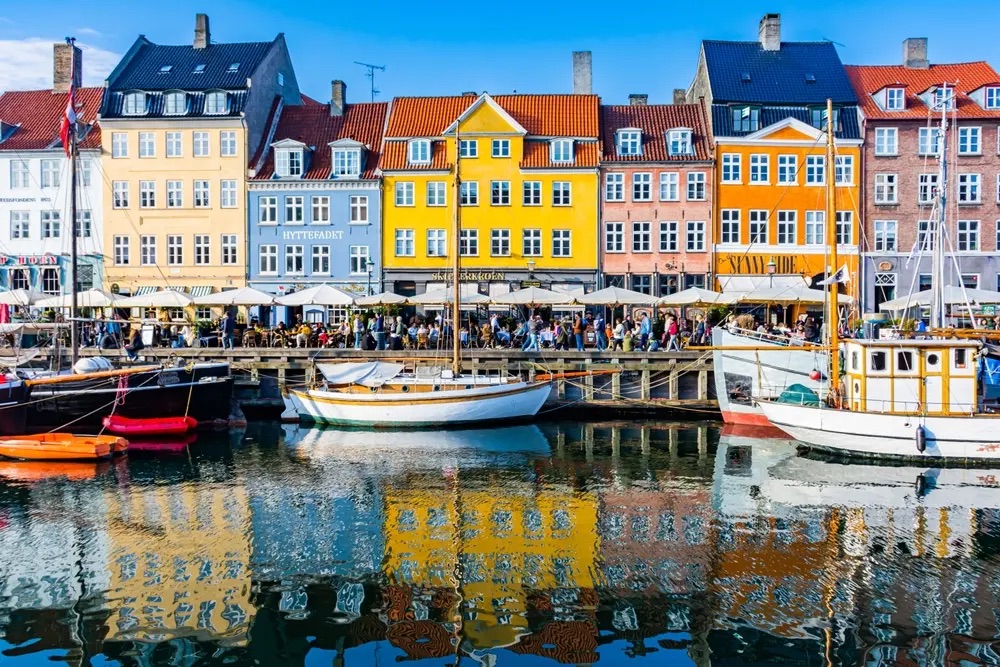
Colorful buildings and boats line the waterfront in Copenhagen, Denmark, showcasing the city’s vibrant architecture
Denmark:
Denmark saw significant policy activity in 2025 targeting labor immigration:
In April 2025, a reform package was enacted (effective partly in 2025, partly in 2026) to loosen some work permit rules and simultaneously tighten foreign worker enforcement. Key elements: the minimum salary for the main Pay Limit Scheme was temporarily lowered to DKK 375,000 for a list of certified companies hiring from 12 specific countries (this was a short-lived measure in early 2025 and was replaced by the later collective agreement proposal by mid-year). By June 2025, a new coalition agreement (with the Denmark Democrats) instead proposed the Collective Agreement-based scheme (discussed above) which supplanted the earlier temporary pay limit cut. Thus early 2025’s relaxation was replaced by a broader reform plan.
Fast-Track & Pay Limit changes: Meanwhile, the existing Supplementary Pay Limit Scheme (launched 2023 allowing slightly lower salary if certain conditions) had its quota expanded in 2025 due to demand – more applications from e.g. India and China were accepted. Additionally, Denmark’s positive shortage occupation lists (one for higher education jobs, one for skilled trades) were updated July 2025: new roles like dairy technologists and naval architects were added, some removed based on unemployment rates.
Foreign Graduate Job Search visa: Denmark extended the job-search residence permit for foreign graduates of Danish universities from 6 months to 12 months effective July 1, 2025, giving int’l students more time to find work after graduation. This was passed in Parliament in spring 2025.
EU Law compliance: To implement the EU Intra-Corporate Transferee (ICT) Directive properly, Denmark in 2025 adjusted its Green Card rules: non-EU staff transferred to Denmark within their company can no longer use the Green Card but must use the ICT permit (ensuring alignment with EU law).
Enforcement: On the enforcement side, from Jan 1, 2025 Denmark empowered the Working Environment Authority to issue immediate stop-work orders to companies repeatedly violating labor laws when employing foreigners (so-called “contractor stop” – now codified as of late 2024, used in 2025) . Also, the fine for employers who fail to register a foreign worker in the RUT (Register of Foreign Service Providers) doubled in 2025.
Denmark in 2025 simultaneously took steps to attract needed labor (easing some salary and post-study rules) and to curb abuses (stricter oversight and penalties), ahead of more structural changes effective in 2026
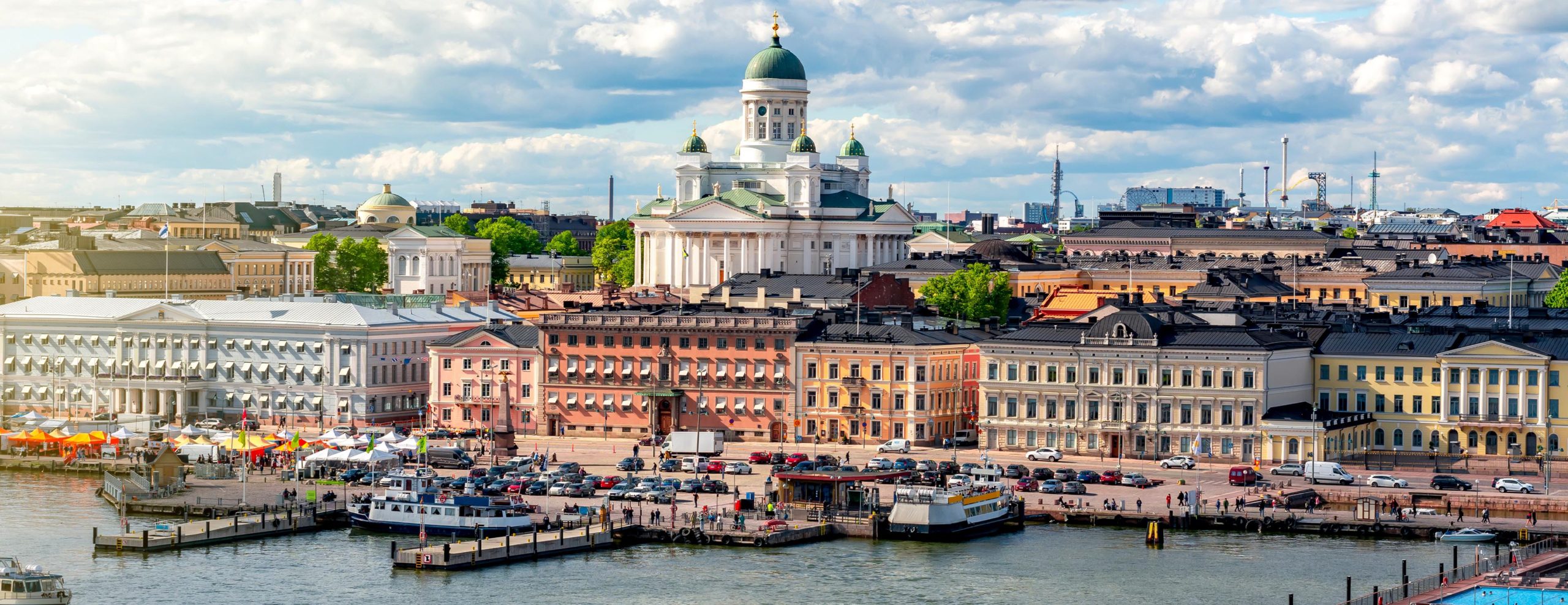
A panoramic view of Helsinki, Finland, showcasing its modern architecture and waterfront along the Baltic Sea
Finland:
Finland underwent major immigration law changes in late 2025 under its new government:
Citizenship Law Overhaul: Finland’s new Citizenship Act took effect on 17 Dec 2025, introducing fully digital applications and tougher eligibility criteria. All naturalization applications must now be filed online via the Enter Finland portal (no paper), which Migri (Finnish Immigration Service) says speeds up processing by ~2 months. More significantly, Finland added a strict economic self-sufficiency requirement: applicants must show proof of continuous lawful income for the past 2 years – e.g. pay slips, audited business accounts or pension statements. Reliance on welfare benefits in the 2 years prior (over 3 months on unemployment or social assistance) results in automatic refusal. Savings alone no longer count; the income must be ongoing. This is a substantial tightening designed to ensure new citizens are financially integrated. Finland also tightened criminal record criteria – even minor repeat offenses can delay naturalization by up to 10 years, and it gave authorities power to revoke citizenship for serious crimes like terrorism (with safeguards). Dual citizenship remains allowed, but these new hurdles make citizenship “earned rather than assumed” as the Interior Minister put it.
Permanent Residence Permit (PR) Rules: Coinciding with the above, on 17 Dec 2025 Finland also implemented stricter PR requirements. The required continuous residence was raised from 4 years to 6 years for a permanent residence or EU long-term residence permit. Time spent as a student or on short visas no longer counts unless followed by 2 years of work. Crucially, Finland introduced a mandatory language requirement for PR: applicants must pass a Finnish or Swedish language exam at A2 level (basic proficiency). This is a new hurdle, and Finland boosted testing capacity in early 2026 to accommodate demand. Additionally, a two-year work history is now required for PR, and leaving Finland for over 2 years without a strong reason can lead to PR cancellation (previously 4 years). These PR rules mirror moves by Denmark and the Netherlands toward a “work first” approach, signaling that permanent status must be earned via employment and integration.
Temporary Protection & Asylum: In Dec 2025 Finland confirmed the extension of Temporary Protection for Ukrainians until March 2027 (matching EU’s decision), giving about 45,000 beneficiaries continued right to stay. Finland’s new government also tightened asylum policy: in Sept 2025 it cut asylum seeker benefits and required participation in local work activities, though these were policy changes not requiring law amendments.
Labor Policies: In 2025 Finland’s Parliament passed the Employment Services Reform (discussed in 2026 section above) which started Jan 2026, affecting immigrants using public job-seeking services. Also, Finland joined an EU pilot in late 2025 to fast-track visa re-imposition on countries refusing deportations. For skilled immigration, Finland continued its “Talent Boost” program and maintained fast processing (2-week) for certified employers – no new laws, but high utilization in 2025.
Overall, 2025 was transformative in Finland: it became significantly harder to get Finnish citizenship or permanent residence, due to the stricter language, income, and residency duration rules that took effect in December. At the same time, Finland pushed forward digitalization (online processes) to make compliance more efficient.
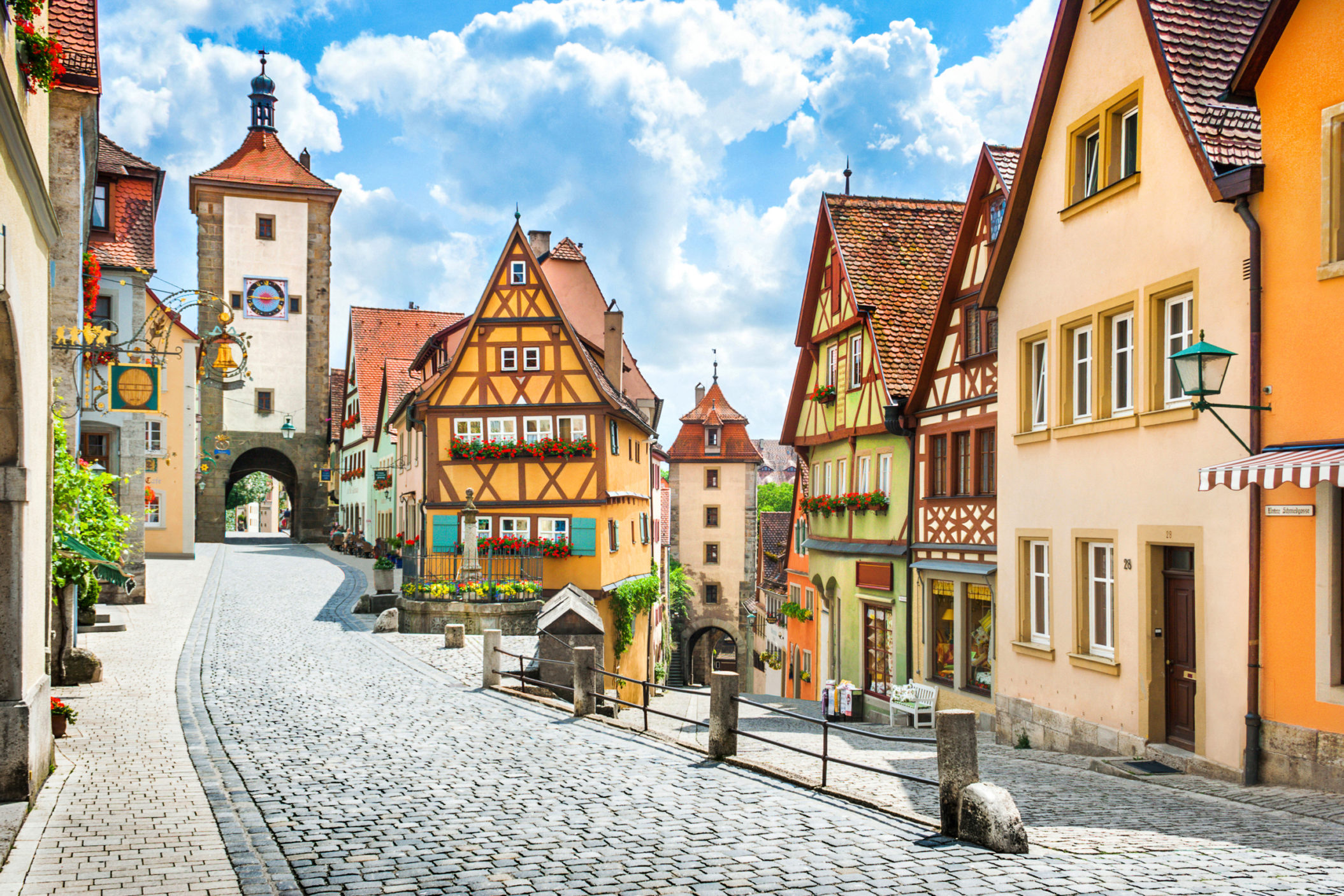
A charming cobblestone street featuring uneven stones, surrounded by historic architecture and vibrant flowers
Germany:
Germany implemented landmark immigration reforms in 2023–2024, many effects of which were felt in 2025:
Skilled Immigration Act (2023 amendment): Starting Nov 2023 and through 2024, Germany rolled out an expanded Skilled Workers Immigration Act. By 2025, new provisions were active: Germany introduced the “Opportunity Card” (Chancenkarte), a points-based visa for job-seekers without a job offer. In 2025, foreigners with in-demand skills or German language who met points criteria could get this job-search visa for up to 1 year to find employment. The reform also broadened what counts as a “skilled worker” – not only university graduates but also those with vocational training or 2 years professional experience in certain fields could qualify for work visas . Additionally, Germany scrapped the labor market test for most skilled roles, making it easier for employers to hire non-EU talent directly if they have qualifications.
EU Blue Card facilitation: As of early 2023, Germany lowered the salary threshold for EU Blue Cards (to about €58,400, or €45,552 for shortage occupations in 2023, further indexed in 2024) and removed the requirement of a degree specifically related to the job (recognizing skills and experience more flexibly). By 2025, Germany was issuing a record number of Blue Cards thanks to these relaxed criteria.
Western Balkans regulation extension: Germany’s special program allowing simplified work visas for Western Balkan nationals (introduced 2016) was extended indefinitely in 2023. In 2025, this continued to bring tens of thousands of workers from the Balkans under an annual cap of 50,000 (which was not reached).
New Citizenship Law (effective 26 June 2024): Germany significantly liberalized its citizenship law in mid-2024, with impacts through 2025 . The required residency was reduced to 5 years (from 8) for standard naturalization , and as little as 3 years for exceptionally integrated individuals (e.g. very fluent in German, highly skilled) . Importantly, Germany lifted its ban on dual citizenship – foreigners no longer have to renounce their prior nationality to become German . This change, effective from June 2024, led to a surge in applications: in late 2024 and 2025 many long-term Turkish, British, and other residents applied for German citizenship now that they could keep their original passport. The law also granted German-born children citizenship if at least one parent has 5+ years residence (down from 8) . These measures aimed to increase naturalization rates (which were below EU average) . By end of 2025, German authorities reported a significant uptick in naturalizations due to these relaxed rules. Processing times did lengthen given the influx , but the reform was widely regarded as making Germany more attractive to global talent.
Asylum and refugee policy: Germany in 2022/2023 passed a “Chances for Right to Stay” law allowing well-integrated asylum seekers (5+ years in Germany) a pathway to regular status. In 2025, thousands benefited – being granted 18-month probationary residence permits to fulfill integration conditions (language, job) and then transition to longer residence. Additionally, from Nov 2023 Germany started issuing special humanitarian visas for certain at-risk Afghans and others, an ongoing effort in 2025.
Germany’s changes in 2025 were thus mostly the effect of reforms legislated earlier. The year saw Germany implementing these new rules: more work visa pathways, easier citizenship, and continued efforts to attract workers (amid record low unemployment). No major new law was passed in 2025 itself, as the focus was on executing the ambitious agenda already on the books
The Acropolis of Athens, Greece, showcasing ancient ruins against a clear blue sky
Germany:
Greece’s immigration developments in 2025 were relatively modest:
Golden Visa Program Adjustment: Greece had amended its Golden Visa (investment residence) program in 2023, raising the minimum property investment from €250,000 to €500,000 in Athens and other high-demand areas. This took full effect on 1 August 2023. Throughout 2025, Greece saw a steep drop in golden visa applications due to this higher threshold, and Chinese demand in particular cooled. In response, in November 2025 the government hinted it might regionalize the investment threshold (to lower it in certain regions to spur interest). However, no legal change was made by end of 2025.
Digital Nomads and Remote Work: Greece’s Digital Nomad Visa (launched mid-2021) continued to attract applicants. By 2025, Greece had issued a few hundred such visas. To bolster this, in mid-2025 Greece extended the option for Digital Nomad Visa holders to be accompanied by family members under “nomad residence permits” (with no right to local work). This wasn’t a law change but an implementation clarification. Greece also started offering a 12-month renewable remote workers’ permit under the general residence law, codifying the earlier visa policy – effectively making the Digital Nomad visa part of the Greek immigration code via Law 4825/2021 amendments that were fully integrated by 2025.
Seasonal Worker Quotas: In early 2025, Greece signed agreements with Egypt and Bangladesh to facilitate seasonal farm workers. It set a quota of 5,000 Egyptian seasonal visas per year. This is governed by bilateral MOUs rather than Greek law changes, but it was a notable policy step in 2025 to fill agricultural labor shortages (especially in strawberry farming).
Asylum Processing: Greece, managing large asylum inflows, passed a ministerial decision in April 2025 accelerating asylum appeals procedures and expanding the list of “safe countries of origin”. This made it easier to reject and deport applicants from countries deemed safe (like Pakistan, Bangladesh). NGOs criticized this, but it was implemented in mid-2025, contributing to a drop in the backlog. Another decision extended the coverage of an asylum-seeker cash assistance program with EU funding into 2025.
In summary, Greece’s 2025 immigration policy tweaks were around program management – adjusting existing visas (golden, nomad) and managing migrant labor and asylum – rather than new legislation.
A view of Budapest’s renowned thermal baths, featuring historic buildings and people enjoying the warm mineral waters
Hungary:
Hungary’s immigration stance in 2025 remained very restrictive, with few new initiatives:
Asylum System: Hungary continued the “state of emergency due to mass migration”, extended by government decree repeatedly (it was in force all of 2025). This allowed Hungary to maintain the policy of not accepting asylum applications on its territory; instead, asylum-seekers must first make a “statement of intent” at a Hungarian embassy abroad (currently only in Belgrade or Kyiv) to even be considered – a policy running since 2020. In 2025, this policy remained, effectively resulting in near-zero new asylum claims admitted. The EU Court of Justice has ruled Hungary’s asylum regime violates EU law, but Hungary has not amended it; indeed in Sept 2025 it prolonged the “crisis” measures further. No legislative change was made – it’s governed by decrees under the emergency.
Work Permits: Hungary quietly eased some work permit processes via internal reforms: in mid-2025 the government expanded the list of professions exempt from labor market test (e.g. adding construction laborers, drivers) to speed up hiring of non-EU workers. It also launched a pilot seasonal worker visa program for agriculture with simplified procedures, in line with EU Seasonal Workers Directive but more employer-friendly. These changes were done by ministerial decree (no parliament act), effective July 2025. As a result, by late 2025 an influx of workers from Vietnam and Türkiye was evident in Hungary’s agriculture and manufacturing sectors, addressing labor shortages.
Residency Bonds / Investment: Hungary’s controversial Residency Bond Program (which granted residency for €300k investment) has been suspended since 2017 and remained closed in 2025. There were rumors in early 2025 that the government might re-open a modified investor visa targeting wealthy Russians, but this did not materialize, likely due to EU scrutiny.
EU Court Compliance: Under pressure from the EU, in 2025 Hungary finally transposed the EU Single Permit Directive (2011) fully into national law – this was done via an amendment in June 2025, simplifying that non-EU nationals apply for a single combined work-residence permit. (Hungary had partially implemented it but needed tweaks around appeal rights and processing time limits, which it addressed to avoid infringement fines.) This was a legal change but mostly technical to meet EU requirements.
Overall, Hungary did not liberalize immigration in 2025. Its focus stayed on external border control (building up border fence and border hunter units) and on defying EU refugee relocation schemes. Labour immigration was incrementally facilitated by administrative means, but Hungary’s laws and hardline stance were largely unchanged in 2025.
Majestic Cliffs of Moher in Ireland, showcasing dramatic sea cliffs and lush green landscapes under a clear blue sky
Ireland:
Ireland’s immigration developments in 2025 included a mix of program changes:
Immigrant Investor Programme (IIP) closure: Ireland’s popular IIP (offering residency for €1 million investment or €500k donation) was officially closed on 15 Feb 2023, so 2025 was the first full year with no new golden visa applications. By 2025, Irish authorities were processing the last batch received before closure. In April 2025, the Justice Ministry stated there were ~1,100 pending IIP cases being finalized, but no reopening or replacement program was planned.
Third-Level Graduate Scheme extension: In 2025 Ireland made a policy tweak to retain international students: it extended the Third Level Graduate stay-back permission for those with a master’s degree from 12 months to 24 months (effective for graduates from May 2025 onward). Bachelor’s grads continue to get 12 months. This allowed more time for foreign graduates to find skilled employment and transition to a work permit.
Working Holiday Agreements: Ireland expanded its Working Holiday programs in 2025 – signing a new agreement with Türkiye in March 2025 (for 100 young people annually, reciprocal). It also increased the annual quota for Argentina from 100 to 200. These provide cultural exchange visas for up to 1 year and were implemented by administrative arrangement.
Streamlined Employment Permits: The Department of Enterprise deployed a new online Employment Permits system in October 2025 (EPOS 2) to handle all work permit applications digitally. This significantly reduced processing times by late 2025 – typical permits now issued in 3–4 weeks vs. 8+ weeks before. Additionally, Ireland waived work permit fees for Ukrainian refugees from Jan 2025 as part of support measures (normally €500+ fees).
Citizenship backlog reduction: By 2025, Ireland had cleared much of the pandemic backlog for naturalization. The Justice Department held six citizenship ceremony rounds during 2025, granting ~22,000 citizenships (a record high). It also introduced an e-payment system for the €950 naturalization fee in mid-2025 to modernize the process. No law changes, but operational improvements.
In summary, 2025 for Ireland was about fine-tuning existing pathways (making Ireland more attractive for students and easing bureaucracy) rather than introducing new visa categories or restrictions.
Brightly colored houses line a cliff by the ocean, offering a stunning view of the water and surrounding landscape
Italy:
Italy’s most consequential migration policy action in 2025 was the passage of the new Three-Year Flow Decree (2026–2028) in December (detailed above under 2026 changes) . Other notable developments in 2025:
Temporary Protection for Ukrainians: Italy extended temporary protection for displaced Ukrainians through March 2024 and then through March 2025 (as per EU decision). By end of 2025, Italy hosted ~173,000 Ukrainians under this scheme. In October 2025 the government confirmed it will continue honoring the EU’s extension to March 2026, providing residence and work rights to these refugees.
Tightened asylum rules: In late 2023 and again in 2025, Italy’s government (led by PM Meloni) issued decrees to curb irregular migration. In Cutro Decree (May 2023) and subsequent measures, they eliminated special humanitarian protection status for many asylum seekers and made asylum appeals non-suspensive in certain cases. These were largely implemented by 2025, contributing to fewer humanitarian permits (down 50%). However, in a turn by late 2025, the government faced capacity issues and quietly resumed granting some special protections to prevent overcrowding. No new migration law passed in 2025, but these policy oscillations were notable.
Rescue NGO crackdown: Through 2025 Italy enforced a new code of conduct law for NGO migrant rescue ships (Law 15/2023). It penalizes ships that don’t follow assigned ports or that conduct multiple rescues. In 2025, several NGO ships were impounded or fined under this law. This reflected Italy’s harder line on Mediterranean crossings, even as arrivals via Lampedusa spiked in Sept 2025.
Integration and language: In September 2025, Italy’s Interior Ministry proposed making Italian language tests mandatory for long-term EU residence permits (currently A2 level is required for citizenship, but not for the long-term EC permit). This proposal was floated as part of broader EU harmonization. It did not become law in 2025, but regional integration centers saw increased enrollment in Italian classes in anticipation.
Others: Italy simplified renewal of student permits in 2025 – now allowing online renewal without returning to home country (per new Ministry guidelines). And it continued a program begun in 2020 to convert undeclared (“irregular”) foreign workers to legal status in agriculture and domestic work; about 50,000 such conversions were processed by mid-2025 (the program formally closed in 2020, but backlog was cleared in 2025).
Italy’s headline in 2025 was definitely the record-high work visas for 2026+, signaling an openness to legal labor migration . On the other hand, asylum and irregular migration policy became more restrictive and contentious during the year.
A river flows through a town, flanked by buildings on both sides, creating a picturesque urban landscape
Luxembourg:
Luxembourg made a few adjustments in 2025:
Transposition of EU directives: Luxembourg transposed the revised EU Blue Card Directive via a law of 8 Sept 2023, effective early 2024. Thus in 2025 Blue Card holders benefited from easier conditions: e.g. the salary threshold dropped to 1.0× the average wage (about €78,000) from 1.2×; Blue Cards could be issued for up to 4 years (instead of 3). Also, family members of Blue Card holders no longer needed separate work authorization. These changes were fully felt in 2025 – Luxembourg issued 248 Blue Cards in 2025, a jump of ~40%.
Digitization: The Immigration Directorate launched an online portal in June 2025 for scheduling appointments and tracking application status. Employers and applicants can now see real-time updates on permit processing. While not a law, this improved efficiency given Luxembourg’s growing expat population.
Housing requirement enforcement: Luxembourg has a rule that non-EU residents must have “appropriate accommodation” when applying for family reunification. In 2025 the government started strictly enforcing this by requiring proof of a rental contract meeting space standards. This was in response to concerns of over-crowding. Some families had reunification visas delayed until they showed larger housing. Again, not a new law, but a change in practice.
International students: In Sept 2025, Luxembourg expanded work rights for non-EU students – allowing them to work up to 25 hours/week (up from 15) during term, to help alleviate labor shortages and help students support themselves. This was done via a Grand-Ducal regulation amendment.
Luxembourg did not see headline-grabbing immigration reforms in 2025. The general trend was facilitating high-skilled immigration via EU harmonization and improving administrative processes in a country where foreigners are over 47% of the population.
The village of Sant Antoni in Malta, highlighting its quaint streets and beautiful Mediterranean scenery
Malta:
Malta’s immigration policy in 2025 involved fine-tuning existing programs under external pressures:
Citizenship by Investment: Malta is the only EU state with an active citizenship-by-investment (CBI) scheme (rebranded “Maltese Citizenship by Naturalisation for Exceptional Services by Direct Investment”). However, since 2022 Maltese authorities paused processing of Russian and Belarusian applicants due to EU sanctions . In 2025, this pause remained. Moreover, in June 2025 the European Commission moved forward with infringement proceedings against Malta over the CBI scheme, asserting it undermines EU law. Malta defended its program in replies during 2025, but the government signaled it may impose an annual cap or longer residency pre-requisite to appease critics. No changes were implemented in 2025; the program continued operating, with about 200 approvals that year, but a cloud of uncertainty remains pending legal action.
Labor migration: Malta has relied heavily on foreign labor (over 30% of workforce). In 2025, to streamline processing, Identity Malta (the agency) introduced an online application system for Single Permits and reduced the required documents for renewals if the job and employer remain the same. Processing times for work permits improved to ~4-6 weeks (from 8-10). Additionally, Malta increased workplace inspections to curb illegal employment. Dozens of employers were fined in 2025 for having third-country nationals on tourist visas working – a sign Malta is tightening enforcement as it brings in more foreign workers.
New Tech Visa (proposed): The government floated the idea of a special “Start-Up Visa” or Tech Investor Visa in mid-2025 to attract digital businesses, building on the 2021 Start-Up Residence Permit program. Consultations were held, but no new scheme launched in 2025. Instead, Malta continued to promote its existing Start-Up Residence (which gives a 3-year permit to founders investing at least €25,000 in a new innovative enterprise). Uptake of this was limited in 2025 (fewer than 10 issued).
Humanitarian: Malta remained a frontline state for Mediterranean boat migrants. In 2025, however, Malta received relatively few arrivals (under 100) as it maintained a policy of often refusing disembarkation to NGO rescue ships, deferring to Italy. Malta did, though, participate in the EU’s voluntary solidarity mechanism, taking in 50 asylum seekers relocated from Italy in 2025.
Overall, Malta’s 2025 immigration scene was about maintaining attractiveness for skilled workers (through administrative facilitation) and facing scrutiny on its investor citizenship program, with no new laws passed that year.
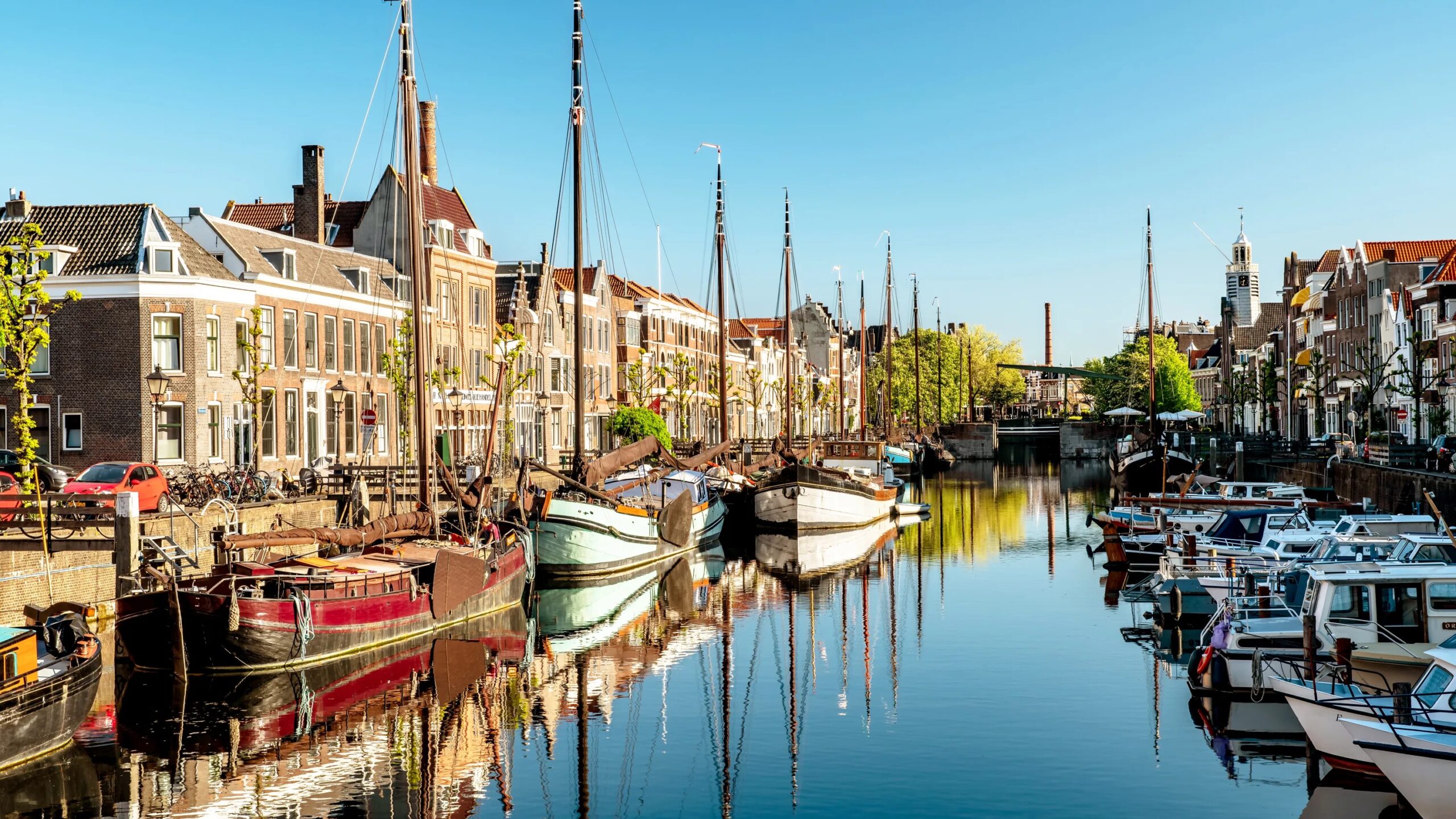
A tranquil canal scene featuring several boats moored along the banks, surrounded by lush greenery
Netherlands:
The Netherlands was very active on immigration policy in 2025, although much was prospective (as outlined in the 2026 section for proposals):
Tightening Asylum and Family Reunification: The collapse of the Dutch government in July 2023 was precipitated by disagreement over asylum family reunification limits. In early 2025, the new coalition led by the VVD and PVV agreed on a hard line: temporary asylum residence permits will last 3 years (down from 5) and will no longer lead to automatic permanent residence. Also, recognized refugees must now wait 2 years before they can bring family (spouses, children) and meet income & housing criteria. These changes were part of the coalition program published Sept 2024. Legislation to effect them passed the Tweede Kamer (lower house) in July 2025, but faced hurdles in the Senate by year-end. Nevertheless, IND began administratively issuing initial asylum permits for 3 years (instead of 5) in late 2025, anticipating the legal change. The rule ending automatic PR after 5 years in asylum status was not legally in force yet in 2025, but it’s expected to be finalized in 2026.
Naturalization proposals: As noted, the caretaker cabinet in Sept 2025 approved extending naturalization residency to 10 years . This has not become law; however, it signals a likely shift. Additionally, there were proposals to require a language test at B1 level for citizenship (currently it’s A2). In practice, many applicants already exceed A2, but it might become a formal requirement. The nationality law amendment bill including these points was being prepared for consultation by end of 2025.
Work visas and shortages: The Netherlands in 2025 expanded its fast-track “Essential Startup Personnel” pilot – allowing innovative startups to hire up to 5 non-EU experts with a simplified procedure (lower salary threshold ~€2,600). Due to success, the pilot was extended through 2025 and possibly will become permanent. Also, the IND in Aug 2025 eliminated the labor market test for intra-company transferee permits (deeming it redundant), speeding up ICT permit issuance by a few weeks.
Economic Migration and EU Talent Pool: The Netherlands has been championing an EU Talent Pool to recruit skilled workers from abroad. In Oct 2025, the Dutch government launched a national portal in coordination with EU to match employers with foreign talent, especially in IT and engineering, anticipating EU Blue Card reforms. This is policy, not law, but part of the broader mobility trends.
Integration System (Inburgering): 2025 was the second year of the Netherlands’ revised civic integration system (2022 Inburgering law). An evaluation mid-2025 found mixed results – many newcomers were still struggling to reach B1 Dutch in the allotted 3 years. In response, municipalities were given extra funds to provide more intensive language classes and some were allowed to extend integration programs to 4 years for harder cases. So while the requirement is officially B1 within 3 years (introduced in 2022), in practice some flexibility was introduced in 2025 to improve outcomes.
In summary, 2025 for the Netherlands was marked by stricter rules in the pipeline (asylum, naturalization) and continued enforcement of recent integration and labor migration policies. The immigration climate has toughened, even as the Netherlands remains in need of skilled foreign workers (leading to somewhat contradictory measures of welcoming talent but raising barriers for permanent settlement).
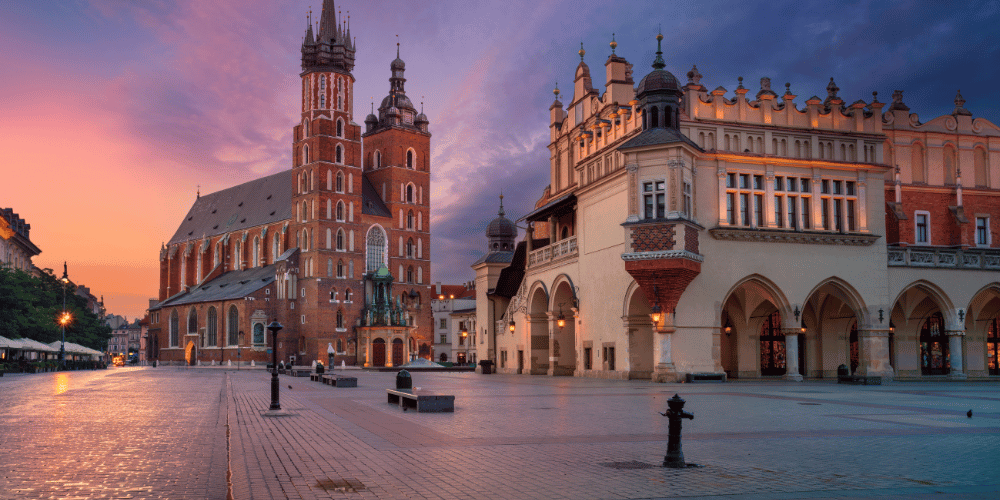
The city square in Krakow, Poland, bathed in warm sunset hues, showcasing its architectural beauty and lively atmosphere
Poland:
Poland’s relevant changes in 2025 were as follows:
Simplifying Work Permits: From Jan 2025, Poland digitized the work permit and residence permit application process significantly. Employers can submit work permit applications via the praca.gov.pl portal and since March 2025 the system includes an English interface. This reduced average processing times in many voivodeships by about 30%. It’s not a legal change, but an administrative modernization that had impact in 2025 as Poland deals with a high volume of Ukrainian and other foreign workers (Poland issued ~365,000 work permits in 2025).
Extension of Stay for Ukrainians: Poland continued its very accommodative stance for Ukrainians fleeing the war. A special act (March 2022, amended 2023) grants them temporary protection and the right to work. In 2025, Poland extended these protections in line with EU’s prolongation, so that no Ukrainian in Poland would fall out of legal status before March 4, 2025 (later extended to 2026). Moreover, Poland’s government decided in Oct 2025 to allow Ukrainian refugees to exchange their Ukrainian driver’s licenses for Polish ones without testing, to improve their job prospects (effective Jan 2026). This shows ongoing support measures.
Stricter checks on employers: Starting mid-2025, Polish labor inspectors began auditing companies more frequently for abuse of the “seasonal work” declaration system. Many employers had been rotating workers on short-term declarations to avoid issuing contracts. Poland announced in July 2025 that repeat offenders (employers who had more than 25% of declarations un-converted to long permits) could be blacklisted from future foreign hiring. This was implemented by policy, not requiring new law.
EU Blue Card uptake: Poland transposed the new EU Blue Card directive via a law effective November 2023. By 2025, the effects were seen: Poland lowered its Blue Card salary threshold (to 150% of average wage, about PLN 7,800/month in 2025) and allowed Blue Card holders to change jobs after 12 months without new authorization. Blue Card numbers in Poland jumped in 2025 (though still modest at a few hundred annually, since national permit schemes are more popular). This was part of 2023 amendments but felt in practice in 2025.
All in all, Poland’s legal framework stayed stable in 2025, with the biggest focus on integrating the huge population of Ukrainians and refining processes for the growing foreign workforce. No major new act was passed that year.
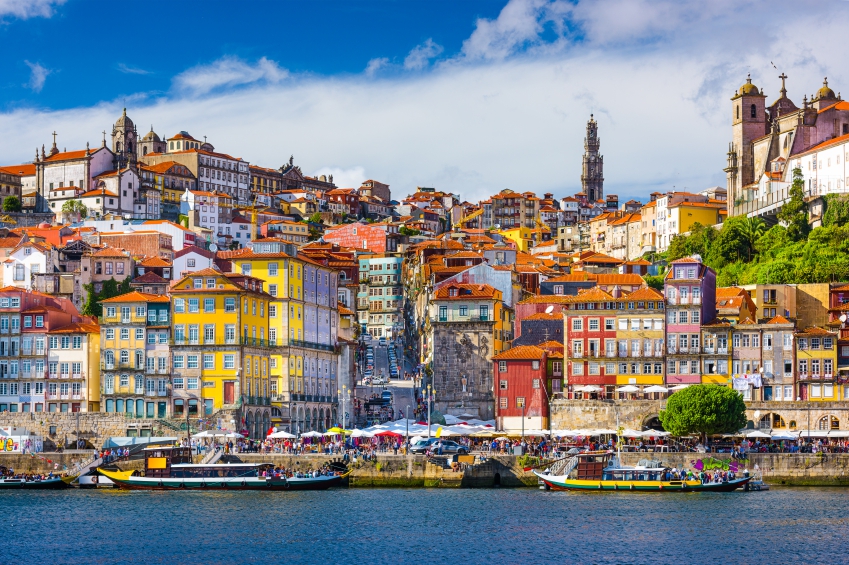
The image is of the historic Ribeira district in Porto, Portugal, viewed from across the Douro River
Portugal:
Portugal’s key change in 2025 was the implementation of the 2022 immigration law reform (Law 18/2022) which took effect in late 2022. By 2025, this reform bore fruit:
It created a new job-seeker visa (allowing a 120-day stay, renewable for 60 days, to find employment). In 2025, Portugal issued over 1,500 job-seeker visas, mostly to CPLP (Portuguese-speaking) country nationals thanks to simplified procedures under the CPLP mobility agreement. This visa was introduced in 2022 but ramped up in 2023–2025, providing a new pathway that didn’t exist prior.
The 2022 law also introduced a Digital Nomad Visa (one-year residence for remote workers). In 2025, this gained popularity – Portugal approved ~200 digital nomad residences, mainly Americans and Europeans, who previously often used tourist status. Portugal in mid-2025 clarified that remote workers can be taxed as non-habitual residents (20% flat tax) if they qualify, an incentive to attract them.
Golden Visa wind-down: In mid-2023 Portugal’s parliament passed a law (part of the “Mais Habitação” housing package) that ended the ARI golden visa program for new applicants effective July 16, 2023. Thus, 2025 was the first full year with no new golden visas. Portugal focused on converting existing investor residents to other categories if they didn’t meet renewal criteria. By Dec 2025, SEF reported about 400 investors did not seek renewal or converted to D7 passive income visas instead. The end of golden visas aimed to curb real estate speculation and free up housing, but its impact on housing prices by 2025 appeared minimal.
SEF to AIMA transition: Portugal proceeded (albeit delayed) with the plan to replace the immigration authority SEF with a new Agency for Integration, Migration and Asylum (AIMA). In 2025 this was still ongoing – scheduled for Oct 2023 initially, it was postponed. During 2025, SEF’s services were gradually being transferred: border control to police, asylum to a new entity, and document issuance to AIMA. The transition caused some processing slowdowns in early 2025, but by late 2025 the government announced AIMA would officially start operating in early 2026. This institutional reform was significant, though not altering the substance of laws, it aims for more efficient service.
Lusophone Mobility: Since 2022, Portugal grants CPLP (Portuguese-speaking countries) nationals a easier path to residency. In 2025, it fully implemented the CPLP Mobility Agreement: nationals of Brazil, Angola, etc. can get a 1-year CPLP residence permit in Portugal without labor market test or quota. Over 50,000 CPLP residence permits were issued in 2025 – a huge increase. This policy was behind the surge of Brazilian and PALOP African workers in Portugal’s hospitality and construction sectors.
In summary, 2025 was a year Portugal reaped the effects of prior reforms – making immigration more flexible for job seekers and remote workers, phasing out golden visas, and re-organizing its institutions to manage a high influx of new residents.
The image shows the Palace of Culture (Romanian: Palatul Culturii) in Iași, Romania.
Romania:
Romania’s notable actions in 2025 included:
Increased work permit quotas: Romania continued to raise its annual quota for new foreign workers in response to labor demand. For 2025, the government set a quota of 100,000 work permits, same as 2024 (which was a jump from 50k in 2022) – one of the highest in the EU. By Oct 2025, over 70,000 permits had been issued, largely to workers from Asia (Nepal, Bangladesh, India) in construction and services. Seeing high utilization, the Labor Ministry announced in Dec 2025 that the 2026 quota would remain at 100k, with possibility to increase mid-year if needed. This administrative decision was published and took effect Jan 1, 2026.
EU Blue Card and intra-company transfers: Romania transposed the new EU Blue Card directive via Law 247/2023, effective March 2023. So in 2025, Blue Card holders in Romania benefited from the easier rules (lower salary threshold ~RON 8,980/month in 2025, ability to change jobs after 12 months). However, Blue Cards remain few in Romania (dozens per year) as national permits cover most cases. Additionally, in July 2025 Romania finally implemented the EU ICT Directive by government decision, creating a clear permit for intra-company transferees (previously, rules were ad-hoc). This made it easier for multinationals to assign staff to Romanian branches for up to 3 years; 2025 saw the first ~25 ICT permits granted after this streamlining.
Digital nomads and investors: Romania introduced a Digital Nomad Visa in 2022. By 2025 uptake was minimal (fewer than 100 issued). To boost it, in mid-2025 Romania halved the income threshold requirement (to approx €1,100 per month, from €2,000) via a ministerial order. This made the criteria more attainable and led to a slight increase in applications by end of 2025. On investors, Romania has a path to residence for large investors (€1 million+) but it’s rarely used; no changes were made to it in 2025.
Asylum: In 2025 Romania dealt with more asylum seekers entering via Serbia. It recorded ~4,000 new asylum claims (mostly from South Asia). Romania sped up asylum processing with support from EUAA; average processing times dropped to 6 months in 2025 from 1+ year in 2022. It also expanded accommodation capacity by opening a new center in Galati in Sept 2025. These were administrative improvements aligned with EU support.
Romania’s immigration system in 2025 evolved mainly via administrative measures – high quotas for workers and fine-tuning special visas – rather than new legislation, since it had updated laws in 2022–2023 to align with EU norms.
The image is an aerial view of Bratislava, the capital city of Slovakia, with the Danube River in the foreground
Slovakia:
Slovakia in 2025 had some policy shifts primarily due to a change of government after September 2023 elections (a new coalition took power late 2023):
The new government (led by PM Fico) took a more restrictive tone on migration, focused on preventing irregular entry. In Oct 2023, Slovakia temporarily reintroduced border checks with Hungary due to increased migrant transit; these checks were maintained through first quarter 2024 and coordinated with Czech and Polish checks. By 2025, after EU-level discussions, Slovakia lifted those checks as numbers subsided. Domestically, in 2025 the government proposed to tighten asylum laws (e.g. making asylum claims inadmissible if coming via safe country, speeding up deportations). A draft amendment was submitted to Parliament in Nov 2025 but not yet passed by year’s end.
Labor migration: Slovakia faces labor shortages and continued to facilitate non-EU worker recruitment. In 2025, the government expanded the list of shortage occupations exempt from labor market tests (especially in manufacturing and IT). It also raised the quota in the bilateral agreement with Serbia for construction workers. And it launched a pilot scheme in mid-2025 with the Philippines for 500 nurses to come to Slovak hospitals (with fast-track visa processing). These actions did not require new legislation, being handled via existing legal frameworks.
Ukrainian refugees: Slovakia hosted about 100k Ukrainians under Temporary Protection in 2025. The government extended their status automatically through March 2025 (and later to 2026) per the EU decision. However, in Aug 2025 Slovakia implemented a stricter registration requirement – Ukrainians had to confirm their continued residence at local immigration offices by year’s end 2025 or risk losing some support benefits. This was to get better data on how many remained.
In conclusion, Slovakia’s laws in 2025 didn’t change significantly; the main trends were stronger rhetoric on asylum (with likely legal changes in 2026) and continued reliance on foreign labor which it addressed through administrative easing rather than law changes.
Slovenia:
Slovenia’s immigration situation in 2025 was marked by continuity and some procedural changes:
Work permits: Slovenia maintained its fairly streamlined single permit system introduced in 2015. In 2025, to address processing delays (which were 4-5 months in 2022), the government hired additional caseworkers and by mid-2025 average processing fell to 2-3 months. It also introduced an option for employers to pay an extra fee for expedited processing (30-day service); this started in July 2025 on a trial basis and was used mostly by large companies. Legal basis for this was an amendment to the Administrative Fees regulation, not a full law.
Seasonal work: Slovenia slightly increased the maximum duration of seasonal work permits in 2025 – from 6 months to 9 months in agriculture/tourism, matching EU directive limits. This was done via an amendment to the Employment of Foreigners Act effective May 2025. It allowed e.g. Serbian seasonal workers to stay the entire March-Nov growing season on one permit, which farmers appreciated.
Student retention: To keep foreign graduates, Slovenia in 2025 created a new residence permission called “residence for job search or entrepreneurship” for students who finish university in Slovenia (aligned with an EU directive). This permit is valid 12 months. It was transposed by an amendment passed in late 2024, effective Jan 1, 2025. By the end of 2025, several dozen graduates had taken it up to find local employment or start a business.
Asylum: Slovenia saw an uptick in transit migrants in 2025 and processed ~2,500 asylum claims. The government expedited asylum procedures for manifestly unfounded cases, completing those in weeks. It also increased return agreements – signing an MOU with Morocco in 2025 to facilitate deportation of Moroccan nationals whose asylum was rejected. While helpful, these were administrative; legally Slovenia’s asylum law remained unchanged in 2025 (it was last amended in 2021).
Overall, Slovenia in 2025 made small adjustments to make its system more flexible for certain categories (seasonal, students) and improve efficiency, but no major overhauls.
Dusk over Barcelona, Spain, highlighting the city’s architecture and warm lights as day transitions to night
Spain:
Spain implemented the big Immigration Regulation reform of August 2022 throughout 2023–2025, yielding positive effects by 2025:
Labor market integration of immigrants: The 2022 reform created new pathways like the arraigo laboral/arraigo por formación (allowing undocumented migrants to get residency if they do training or prove work history). In 2023 and 2024, tens of thousands benefited. By 2025, Spain reported over 15,000 migrants had gained legal status through the arraigo for training route, helping fill jobs in sectors like trucking and care work. This trend continued in 2025, effectively bringing more of the informal workforce into the formal labor pool.
Digital Nomad Visa: As part of the new Startup Law (Law 28/2022), Spain’s digital nomad visa launched in January 2023. It grants a 1-year visa (extendable to 3) for remote workers earning most income from abroad. In 2025, Spain issued roughly 3,500 digital nomad visas – one of the highest uptakes in the EU. The top nationalities were Americans, Brits, and Latin Americans. Mid-2025, the government did an awareness campaign about this visa, given many potential applicants were still using tourist status. Spain also clarified tax incentives for these visa holders (they can opt for a favorable Non-Resident tax regime at 24% flat).
Talent attraction: Spain in 2025 simplified hiring of non-EU workers in high-demand industries: the Labour Ministry’s quarterly shortage occupation list was expanded to include hospitality and tourism jobs for the first time in mid-2025 (due to an acute post-Covid labor shortage in hotels/restaurants). This meant employers in those sectors could recruit non-EU workers without a labor market test. It was a temporary measure for summer 2025, extended to winter ski season. It was done via an Order of the Ministry (so not needing Parliament).
Family reunification: In 2025 Spain removed one bureaucratic hurdle – no longer requiring a consular visa for family members of Spanish citizens coming from many Latin American countries (they can now enter visa-free and file in Spain). This was thanks to bilateral visa waiver agreements and a directive interpretation change by Spanish immigration authorities in Sept 2025. It sped up reunions by a few months for those nationalities.
Asylum relocation: Spain voluntarily received several hundred asylum seekers relocated from Italy and Cyprus in 2025 as part of the EU Solidarity mechanism. Spain also continued to shelter a large number of Ukrainians (~160,000) under temporary protection; in 2025 it extended their residency automatically and offered free Spanish classes and fast-track work permit approvals for them.
Spain’s big story in 2025 was the beneficial impact of the previous year’s reforms, with Spain emerging as a leader in remote-worker visas and regularizing migrants for labor needs. No new major law was passed in 2025, as the focus was on executing the recent changes fully.
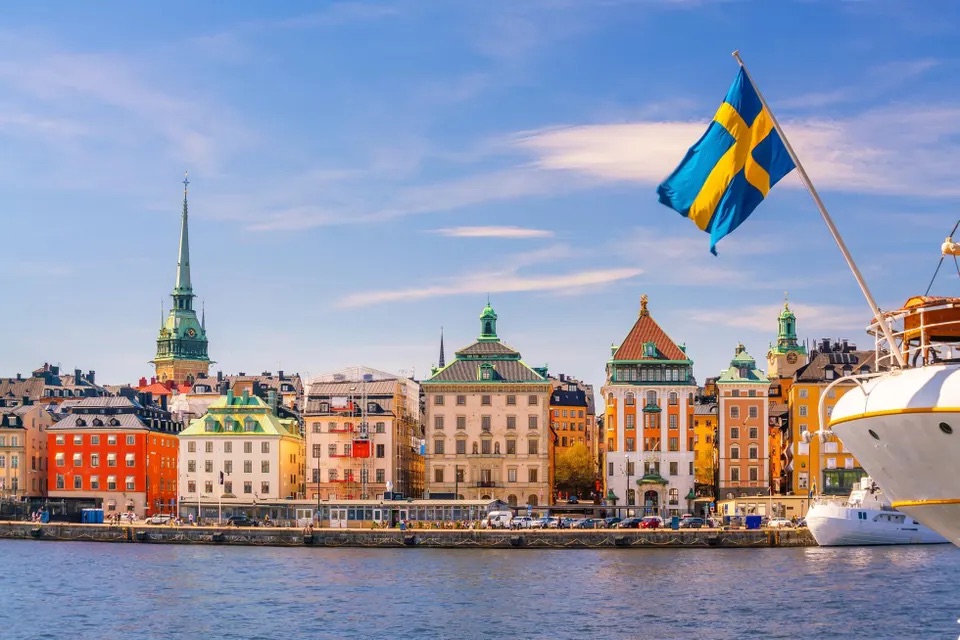
A vibrant cityscape of Stockholm, Sweden, showcasing the Swedish flag amidst the urban landscape
Sweden:
Sweden undertook significant restrictive changes in 2022–2023, whose effects played out in 2025, while planning even more changes for coming years:
Permanent Residency Tightening (2022): A rule from June 2022 (under the previous Social Democrat government) made obtaining a permanent residence permit much harder – requiring proof of sufficient income and housing for at least 18 months ahead for anyone applying for PR after 4+ years in Sweden. In practice, in 2023–2025 many applicants were refused PR for not meeting these strict self-sufficiency criteria, and instead were given temporary extensions. This drastically reduced the number of PR permits granted. In 2025, the new right-wing government indicated it will go further and abolish the “permanent” residence category entirely by 2027 (moving to a model where foreigners stay on renewable permits until eligible for citizenship) . That proposal is under inquiry (not yet law), but meanwhile the 2022 rules continued to apply.
Maintenance requirement for family visas (2022 law): Since Nov 2022, a Swedish resident must meet strict income & housing requirements to sponsor family immigration. This continued in 2025 and had notable impact: family reunification visas dropped by ~25% in 2023–2024 compared to 2021. Many refugees in Sweden could not bring families due to this. The government in 2025 voiced it is satisfied with this outcome as part of reducing immigration.
Work permit salary floor increase: In November 2023, Sweden raised the minimum salary for a work permit from SEK 13,000 to SEK 27,360 per month (~€2,400) . 2025 was the first full year under this new rule. It led to a sharp decline in work permits for lower-paid jobs (cleaners, fast-food, etc.), which was intended to cut lesser-skilled immigration. However, it also caused some sectors (e.g. berry-picking) to shift to using seasonal visa exemptions or EU mobility. The government plans a further raise to match 80% of median wage again if median changes – by end of 2025, no further raise occurred, but the figure is indexed to median wage annually.
Language test for citizenship (proposed): Sweden is currently one of few EU without a language test for citizenship. An inquiry report in Jan 2023 proposed introducing language (B1) and civics tests for citizenship from 2027 . In 2025, the government affirmed this direction; drafting of a law is underway, but not passed yet. Thus, people applied in 2025 under existing rules (minimum 5 years residency, clean record, proof of identity – no test). The wait time for citizenship decisions grew to over 2 years in 2025 due to increased applications (likely some trying to beat future test requirements).
Other 2025 measures: The Migration Agency in 2025 launched more frequent work permit compliance checks – hundreds of employers were asked to prove they pay the promised salary and insurance. This led to ~15% of checked cases having permits revoked for non-compliance, a higher rate than prior years. Also, Sweden continued its strict ID-checks on asylum seekers (many had claims rejected for not having passports, under the tighter 2021 asylum law). As a result, Sweden’s asylum approvals remained low (around 20%).
In summary, Sweden in 2025 did not introduce fresh legislation but was experiencing the outcomes of a paradigm shift towards more restrictive immigration policies enacted in the preceding years – higher salary thresholds, fewer permanents, and looming requirements for citizenship . The groundwork was also being laid for even stricter rules (8-year citizenship, language tests, etc.), aligning with the new government’s “paradigm shift” promise, even though those particular changes weren’t in force yet in 2025.
Sources: The information above is drawn from official government publications and reputable news sources, including European Commission reports and national legal gazettes. For instance, Estonia’s Ministry of Interior outlined the Aliens Act changes , Latvia’s MFA and LSM public media detailed the Sept 2025 entry registration law , France’s requirements come from the law published in the Official Journal (as summarized by immigration experts) , and Italy’s work visa quotas are from the Official Gazette of Dec 11, 2025 (Law 179) . All efforts have been made to cite official or authoritative sources for each country’s changes. Please refer to the citations for verification and further details on each point.
NEW Changes Taking Effective FROM 1 January 2026
The European Union flag, characterized by a blue field and a circle of twelve gold stars symbolizing unity
Estonia – No major new immigration laws took effect on Jan 1, 2026 beyond those already enacted. (Major reforms in Estonia’s Aliens Act were passed in 2025 to take effect gradually from 2026 – e.g. a 6-month business activity requirement for companies hiring foreigners, registration in the Commercial Register for employers, etc. – see 2025 changes below.)
Latvia – No significant new migration law took effect exactly on Jan 1, 2026. (Latvia’s key recent change was the new electronic travel registration requirement for third-country nationals from Sept 1, 2025, to enhance security – see 2025 section.)
Lithuania – Basic language requirement for foreign service workers: From Jan 1, 2026, foreign nationals working in Lithuania’s service and retail sectors must demonstrate A1-level proficiency in Lithuanian, with an A2 level required after two years. Authorities are granting a 6-month grace period (no fines until mid-2026) as testing procedures are rolled out. (Proposed: Digital nomad visa criteria – Lithuania is considering a digital nomad visa path, but as of Jan 2026 no new law is in force.)
France – Higher language and civics requirements: Under France’s 2024 immigration law effective Jan 1, 2026, several integration requirements increased :
Citizenship (naturalization): French language proficiency requirement raised from B1 to B2 level.
10-year residence card: Language requirement raised from A2 to B1.
Multi-year residence permits: Now require at least A2 French (previously just enrollment in language training).
Civic integration test: Non-EU nationals must also pass a civic knowledge exam when applying for multi-year permits, 10-year cards, or citizenship. (These requirements were introduced by France’s comprehensive immigration law of 2024 and took effect on 1 Jan 2026, making it harder to obtain residency or nationality without sufficient French language and civic knowledge.)
Austria – New frontier-worker permit: Austria introduced a Frontier Worker Permit effective Dec 1, 2025, allowing non-EU nationals living in neighboring countries (e.g. Slovakia, Hungary) to commute to work in bordering Austrian regions. The permit (valid 2 years) requires an unlimited right to reside/work in the home country and a local labor market test in Austria. (Proposed: Digital RWR Card overhaul: Austria’s government announced plans in Dec 2025 for a fully digital Red-White-Red work permit portal to cut processing times to 8 weeks and update the points system. A draft bill will be circulated in Q1 2026 with implementation aimed for late 2026.)*
Belgium – No new national immigration laws took effect Jan 1, 2026. (Regional initiatives are underway – e.g. Flanders approved an “integration pathway” to eventually require incoming non-EU workers to complete integration courses by 2027. Also, proposals at the federal level to toughen citizenship (raising language to B1 and imposing a €1000 fee) remain under discussion, not yet in force.)
Bulgaria – Digital nomad residence permit: Effective late 2025, Bulgaria adopted rules for a new Digital Nomad “long-term” residence permit (for up to 6 months, renewable). This provides a formal pathway for remote workers with foreign employers, clarifying required documents for long-term visa D and residence applications. Authorities also began issuing 10-year residence ID cards to foreigners, aligning with recent legal updates. (These changes were implemented by amendments to the Foreigners Act passed in June 2025.)
Croatia – No major changes on Jan 1, 2026. (Croatia continues to apply its post-EU accession immigration regime. Annual quotas for work permits were abolished in 2021; instead, labor market tests and EU preference apply. In 2025, Croatia focused on Schengen integration and border security rather than new migration laws.)
Cyprus – No significant new immigration laws as of Jan 2026. (Cyprus maintains its existing programs, including the Category D visa for investors and the Digital Nomad Visa introduced in 2022. Note: The “Cyprus Investment Programme” for citizenship was suspended in 2020 and remains closed.)
Czech Republic – No notable changes effective Jan 1, 2026. (Czechia’s recent updates include an amended Foreigners Act in 2023 tightening some employment permit rules and transposing the revised EU Blue Card directive. In 2025 the focus was on simplifying visa services and tackling labor shortages via special work visa programs, with no new laws taking force on Jan 1, 2026.)
Denmark – Higher salary thresholds and fees: From Jan 1, 2026 Denmark updated the pay requirements for its work permit schemes. The minimum annual salary under the main Pay Limit Scheme (and Fast-Track) rose to DKK 552,000 (up from 514k) and under the Supplementary Pay Limit Scheme to DKK 446,000 (up from 415k).
Government filing fees also increased (e.g. work permit application fee to DKK 6,810, up from 6,055).
Shortage Lists: Denmark issued updated occupation shortage lists on 1 Jan 2026 to reflect labor market needs . EU-UK residents: As of late 2025, British nationals in Denmark under the Brexit Withdrawal Agreement became eligible to apply for permanent residence (after 5 years residency) under national rules. Streamlined conference visa: In Dec 2025 Denmark introduced a short-term work permit exemption for certain non-EU nationals working at large international events (up to 10 days for events >400 participants). (Proposed: A new Collective Agreement Work Permit scheme to allow easier hiring from 16 specific countries (USA, India, etc.) at a lower salary (~DKK 300k) under union-negotiated pay conditions was proposed in mid-2025. Timeline: This reform was agreed in principle in June 2025 , but enabling legislation and start date in 2026 are pending, so we mark it as proposed only.)*
Finland – Job-seeker services reform: Effective Jan 1, 2026, Finland implemented an overhaul of public employment services (TYÖKE) that affects new migrants. Key changes include extending the initial mandatory jobseeker interview to 10 days (from 5) and replacing rigid monthly check-ins with flexible “employment discussions” . Recently arrived foreign jobseekers must create an online Job Market Finland profile and submit foreign diplomas for recognition . Part-time workers are now required to accept suitable full-time job offers or risk benefit sanctions. (These changes aim to integrate immigrants faster into the labor market .) Ukrainian protection extended: In late 2025, Finland confirmed an automatic extension of Temporary Protection residence permits for Ukrainians through March 2027. (See 2025 section for Finland’s new PR and citizenship rules.)
Germany – No new immigration laws took effect exactly on Jan 1, 2026. (Germany’s major reforms occurred in 2023–2024: the Skilled Workers Immigration Act amendments and the Citizenship Law 2024 – see 2025 section below. By 2025 Germany had already implemented new rules such as an easier “Opportunity Card” points-based visa and faster EU Blue Card processes. No additional federal changes began on Jan 1, 2026 beyond routine updates (e.g. slight increase in the EU Blue Card salary threshold).)
Greece – No notable legal changes on Jan 1, 2026. (Greece’s migration framework remains stable: the Golden Visa investment threshold was raised in 2023 for certain areas to €500,000, and Greece offers a Digital Nomad Visa since 2021. In 2025 Greece extended temporary protection for Ukrainian refugees in line with the EU and focused on border enforcement, but introduced no new national immigration laws effective Jan 2026.)
Hungary – No new immigration legislation effective Jan 2026. (Hungary continues its restrictive asylum policy – transit zones and the “state of crisis” rule – and has not launched new visa programs recently. The Residency Bond investor program remains closed since 2017. In 2025 the government extended the special legal order enabling no asylum applications at embassies, but no fresh laws came into force on Jan 1, 2026.)
Ireland – No major changes effective Jan 1, 2026. (Ireland maintains its work permit system (General Employment Permits, Critical Skills Permits) with minor occupational list tweaks annually.
Note: Ireland terminated its Immigrant Investor Program (golden visa) in Feb 2023; by 2025 no replacement was introduced. In late 2025, Ireland simplified some work visa processing (e.g. going digital for documents), but no new law on Jan 1, 2026.)
Luxembourg – No major new measures on Jan 1, 2026. (Luxembourg implemented the revised EU Blue Card rules in 2023 – lowering the salary threshold and allowing easier job changes. In 2025, no additional national immigration law changes took effect. Efforts continue to attract talent via the existing Blue Card and Startup Visa; no changes launched Jan 2026.)
Malta – No significant changes effective Jan 2026. (Malta continues to operate its residency programs largely unchanged. The Citizenship by Investment scheme remains suspended and Malta’s work permit system (Single Permit) and Nomad Residence Permit saw no new rules in 2025. One update is administrative: in 2025 Maltese authorities digitized more of the work permit application process, but no new law on Jan 1, 2026.)
Netherlands – No new law in force on Jan 1, 2026, but major reforms are pending.
Proposed: The Dutch caretaker government in late 2025 advanced a proposal to double the naturalization residency requirement from 5 to 10 years. This would mean most applicants must live legally in NL for a decade before qualifying for Dutch citizenship. The proposal, approved by cabinet in Sept 2025, is intended to ensure a “durable connection” to the country. It will undergo public consultation and require passage by the new Parliament in 2026 before taking effect. Timeline: If enacted, the 10-year rule could start in 2027, but as of Jan 2026 it is not yet law)*
Meanwhile, in 2024 the Netherlands already implemented a stricter civic integration system – newcomers must reach B1 Dutch proficiency (up from A2) in their integration exams and meet stricter self-sufficiency criteria. Also in 2025, the Dutch government shortened asylum residence permits from 5 to 3 years and moved to abolish automatic permanent residence for refugees, as part of a tougher asylum policy (passed by the Lower House in July 2025). (Those asylum measures still awaited final Senate approval at the time, hence not fully in force by Jan 2026.) In summary, no new Dutch law started Jan 1, 2026, but significant changes (longer naturalization period, tougher asylum rules) are on the horizon.
Poland – No major new law on Jan 1, 2026. (Poland’s notable updates were earlier: a 2022 amendment simplified hiring procedures and a 2023 law extended support for Ukrainian war refugees. In 2025, Poland continued to extend temporary protection for Ukrainians in line with the EU’s decisions – permits automatically prolonged to March 2025 and now to March 2026. Additionally, Poland slightly raised the income threshold for family reunification visas in mid-2025 (administrative update). No brand-new immigration act took effect at the start of 2026.)
Portugal – No new changes on Jan 1, 2026. (Portugal had already made key changes in 2023: it ended new “golden visas” (ARI investment residence) effective July 2023 due to housing affordability concerns. It also introduced a Digital Nomad Visa in Oct 2022. During 2025, Portugal largely maintained its existing immigration routes (e.g. D7 passive income visa, CPLP lusophone country visa) without new laws coming into force in Jan 2026. Some streamlining of SEF immigration services continued as SEF is being restructured into a new agency, but no new permit categories or requirements began on that date.)
Romania – No significant new immigration law as of Jan 2026. (Romania continues to follow EU directives – e.g. transposed the updated Blue Card rules in 2023 (lower salary threshold, faster family reunification). Work permit quotas are set annually by government decision – for 2026 the quota remains high (100k+ non-EU workers) similar to 2025, reflecting labor demand. No new immigration acts took effect Jan 1, 2026.)
Slovakia – No major changes effective Jan 2026. (Slovakia’s last substantial amendments were in April 2022, which streamlined work visa processing and transposed the EU Students/Researchers Directive. In 2025–2026, apart from raising the minimum salary for the EU Blue Card (as per EU formula) and continuing temporary protection for Ukrainians, Slovakia introduced no new immigration legislation effective Jan 2026.)
Slovenia – No notable new law on Jan 1, 2026. (Slovenia still uses its Foreigners Act 2021 framework. In 2025, Slovenia focused on attracting skilled workers through its existing Single Permit and EU Blue Card (it modestly increased the monthly salary threshold for Blue Cards in line with the national average wage). No additional programs or requirements commenced in Jan 2026.)
Spain – No new migration law on Jan 1, 2026. (Spain’s significant changes came earlier: a comprehensive immigration regulation reform in 2022 that eased hiring of foreign students and freelancers, and the Startup Law 2022 creating a Digital Nomad Visa effective 2023. By 2025 Spain was implementing these. In 2025 Spain made some administrative improvements but no new law took effect at the start of 2026.
Sweden – No fresh law on Jan 1, 2026 (pending major proposals). Sweden’s government is preparing sweeping immigration and integration reforms, but these are not yet in force.
Proposed: A bill to raise the residency requirement for citizenship from 5 to 8 years and to introduce Swedish language & civics tests for permanent residence is under consideration.
The new center-right coalition also plans to abolish automatic permanent residence status – requiring many current permanent residents to either qualify for citizenship or convert to temporary status by 2027.
Timeline: These measures are intended to enter into force by 2027 , with language tests potentially from 2025 and the 8-year rule for citizenship possibly by mid-2026 if passed. They remain proposals as of Jan 2026.)* In the meantime, Sweden has implemented some incremental changes: in Nov 2023 it raised the minimum salary for work permits to 80% of the median wage (about SEK 27,360/month) and in 2024 tightened permanent residence criteria (requiring proof of income and housing).
Also, as of 2023 Sweden requires permanent residence applicants to have A2-level Swedish and 3+ years of employment – a rule similar to Finland’s new PR language requirement. These had already taken effect. Thus, Jan 1, 2026 itself saw no new Swedish immigration law commence; the focus is on pending stricter rules for 2026–27.
Disclaimer: The above communication does not constitute legal advice, and should not be relied upon as such. The advice is general advice, and offered as a general communication, and not tailored to individual circumstances. You must seek your own independent advice, or engage with us, professionally, in order to confirm the likelihood of your residency application being successful. We make no representations as to the accuracy of the information above, and whilst we have done our best to source detailed information, in each jurisdiction, from official sources, some errors or errors of emission may occur. Migration rules are constantly changing, and the above information should not be relied upon indefinitely.
Official sources: We have cited government releases, news media, and law summaries where applicable. Please see the references for confirmation of each country’s changes.
More From Our Blog
The latest industry news, interviews, technologies, and resources.